
讀書筆記 (1):Deep Learning 的起點 - 從 AI 到 DL 的演進
最近為了準備學校的考試,花了一些時間重新整理 Deep Learning 的基礎知識。雖然考試是全英文的,但為了讓自己理解得更清楚,決定用「中英對照」的方式來整理這份筆記。
本篇主要涵蓋 AI 領域最基礎的架構:從最外層的 AI,到中間的 ML,再到核心的 DL,以及它們背後的數學與學習方式。
1. The Layered Relationship
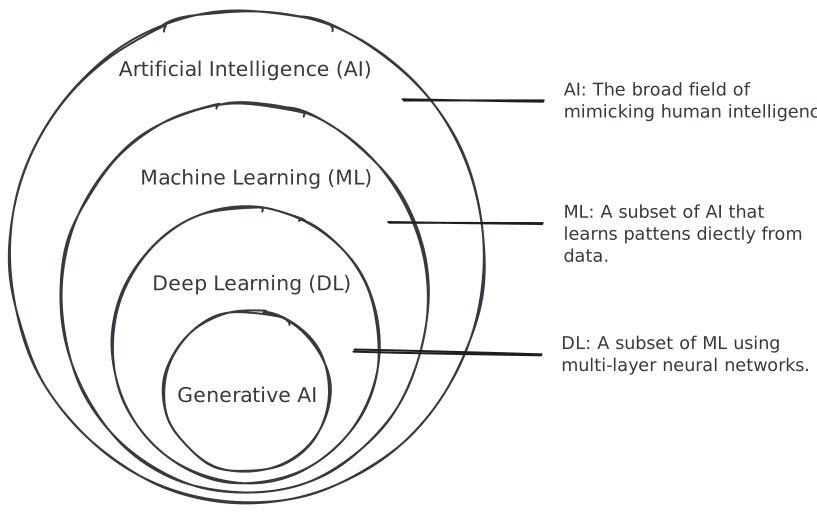 Figure 1: The Hierarchy of AI. AI 是最廣泛的概念,ML 是其子集,DL 則是 ML 中使用神經網路的技術,而 Generative AI 是 DL 的新興應用。
Concept: 就像俄羅斯娃娃一樣,AI 包著 ML,ML 包著 DL,每一層都更專精。
Table 1: Core Concepts of AI
| Concept | Key Definition | My Understanding |
|---|---|---|
| Artificial Intelligence (AI) | The broadest field aimed at simulating human intelligence. | 最廣泛的概念,目標是讓機器能如人類一般。 |
| Machine Learning (ML) | A subset of AI that enables systems to learn from data without explicit programming. | 重點在 Data-Driven。不用手寫規則 (if-else),而是讓機器從資料中找規則。 |
| Deep Learning (DL) | A subset of ML utilizing multi-layered Neural Networks to learn complex patterns. | 關鍵是 Neural Networks。能自動進行 Feature Extraction,不用人工設計特徵。 |
| Generative AI | A class of DL models (e.g., LLMs, GANs) that create new content. | 最近最紅的領域,重點在於 Create 而不是單純的分類或預測。 |
1.1 Machine Learning v.s. Deep Learning
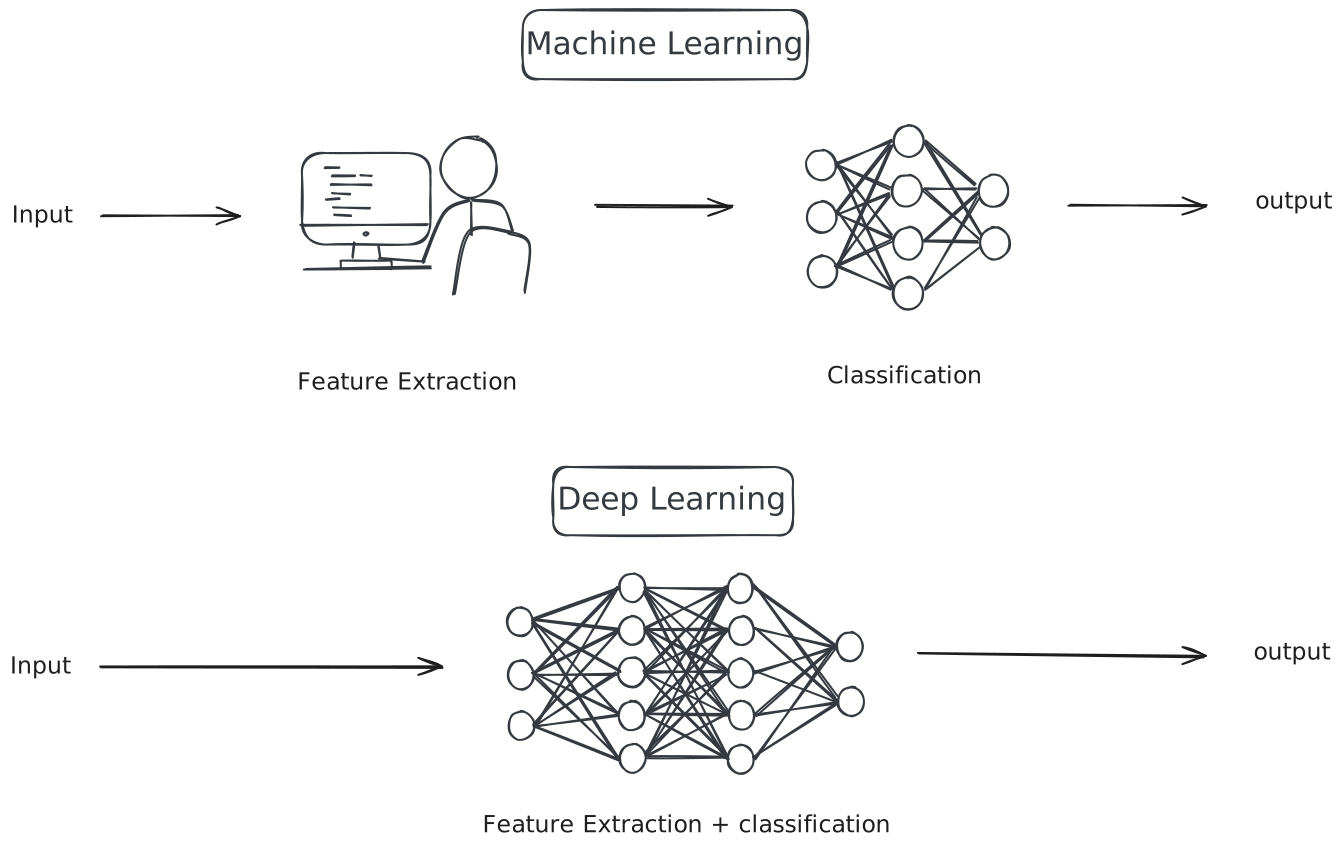 Figure 2: ML vs DL Workflow. 傳統 ML 依賴人工特徵工程,而 DL 能自動從原始資料中學習特徵。
Key Difference: DL 最強大的地方在於 Feature Learning,它能自己學會「什麼是重要的特徵」,不再需要人類專家手動設計。
- Machine Learning: Requires manual, expert-driven feature engineering.
- Deep Learning: Automatically learns features directly from raw data.
2. Learning Tasks and Paradigms
機器學習的方法主要可以分為三種,這取決於我們給機器什麼樣的資料。
2.1 Learning Paradigms
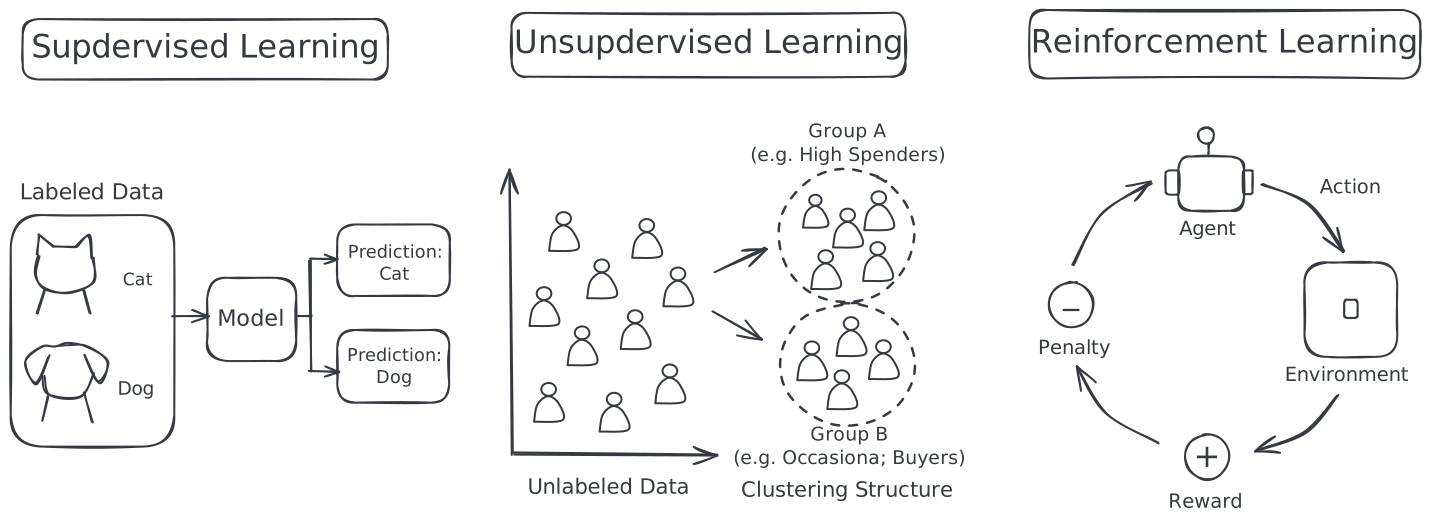 Figure 3: Three Learning Paradigms. 監督式學習 (標籤)、非監督式學習 (結構) 與強化學習 (獎勵) 的核心差異。
Analogy: Supervised 像是有老師教;Unsupervised 像是自修;RL 像是訓練寵物。
-
Supervised Learning (監督式學習)
- Definition: Learning from labeled data.
- Example: Image classification with known labels (e.g., This is a cat, this is a dog).
- 筆記: 就像有老師帶著做題目,有標準答案。
-
Unsupervised Learning (非監督式學習)
- Definition: Finding structure in unlabeled data.
- Example: Clustering customer groups (e.g., grouping customers by purchasing behavior).
- 筆記: 沒有標準答案,讓機器自己去發現資料的內在結構(例如分群)。
-
Reinforcement Learning (RL, 強化學習)
- Definition: Learning through trial and error with a Reward mechanism.
- Core Loop: Agent Environment (Action, Reward).
- 筆記: 就像訓練寵物,做對了給獎勵 (Reward),做錯了懲罰,透過試誤法 (Trial and Error) 來學習最佳策略。
2.2 Learning Tasks
- Classification (分類): Predicting a discrete label (e.g., Spam or Not Spam).
- Regression (回歸): Predicting a continuous numerical value (e.g., Predicting House Prices).
- Clustering (分群): Grouping similar data points together.
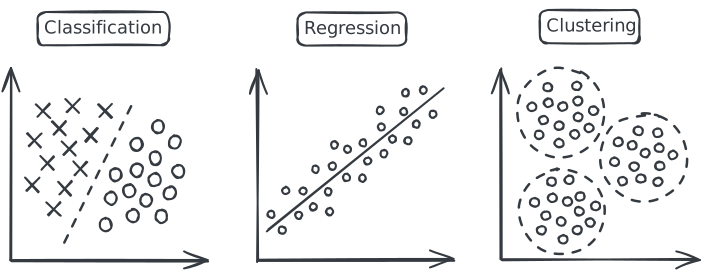 Figure 4: Learning Tasks. 分類 (找邊界)、回歸 (找趨勢) 與分群 (找聚落) 的視覺化差異。
Goal: 根據輸出的型態來決定任務:是類別 (Category)?是數值 (Value)?還是結構 (Structure)?
3. Mathematical Foundations
雖然現在 Framework 很方便,但理解背後的數學對於 Debug 和調參還是很重要的。
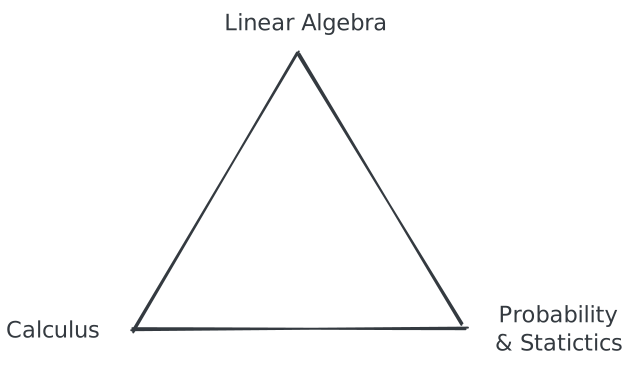 Figure 5: Mathematical Pillars. 支撐 Deep Learning 的三大數學基石:處理資料的線性代數、優化參數的微積分、以及評估不確定性的機率統計。
Foundation: 這三者缺一不可:線性代數是骨架,微積分是引擎,機率是導航。
Table 2: Mathematical Foundations of DL
| Foundation | Core Role in DL | Key Terminology |
|---|---|---|
| Linear Algebra (線性代數) | Essential for representing and manipulating data structure. | Tensors (張量), Matrix Multiplication (矩陣運算)。 DL 的本質就是大量的矩陣運算。 |
| Calculus (微積分) | The engine for optimizing the model parameters. | Derivatives (導數), Gradient Descent (梯度下降)。 Chain Rule 是 Backpropagation (反向傳播) 的核心。 |
| Probability (機率統計) | Quantifying uncertainty and evaluating performance. | Loss Functions (損失函數), Evaluation Metrics (評估指標)。 |
3.1 Data Structures in DL
在 Deep Learning 中,我們使用不同維度的資料結構來儲存數據。
- Scalar (純量, 0D Tensor): 一個單獨的數值 (例如:溫度 25.5 度)。
- Vector (向量, 1D Tensor): 一排數值 (例如:[x, y, z] 座標)。
- Matrix (矩陣, 2D Tensor): 二維的數值表格 (例如:Excel 表格)。
- Tensor (張量, nD Tensor): n 維的數值陣列 (例如:RGB 圖片是 3D Tensor [Height, Width, Channel])。
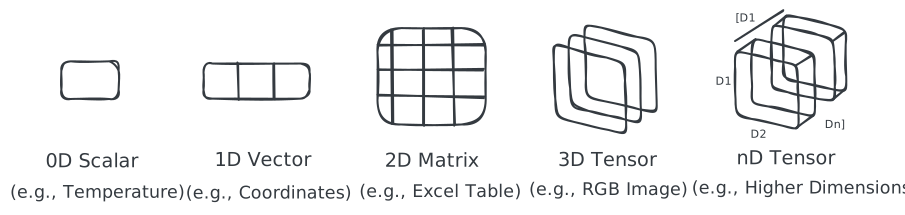 Figure 6: Data Structures. 從 0D 純量到 nD 張量的維度變化。
Terminology: 在 DL 中,我們幾乎只講 Tensor,因為它能概括所有維度的資料。
3.2 Matrix Multiplication
在線性代數中,矩陣運算是最基礎的操作。
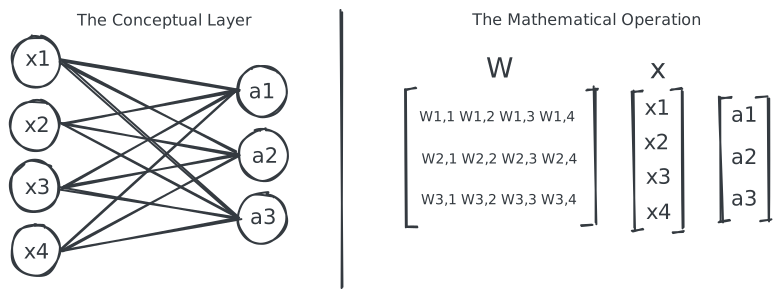 Figure 7: Matrix Multiplication in NN. 神經網路層與層之間的訊號傳遞,本質上就是一連串的矩陣乘法運算。
Mechanism: 神經網路的「思考」過程,其實就是一連串的矩陣乘法與非線性轉換。
3.3 Calculus: The Engine of Optimization
微積分在 Deep Learning 中主要用於「優化」。我們需要知道如何調整參數 (Weights) 才能讓模型的預測誤差 (Loss) 最小化。
- Derivatives (導數): 告訴我們函數在某一點的變化率(斜率)。在 DL 中,這代表「如果我稍微增加這個參數,Loss 會變大還是變小?」。
- Gradient Descent (梯度下降): 利用導數指引的方向,一步步往山谷底(Loss 最小點)走。
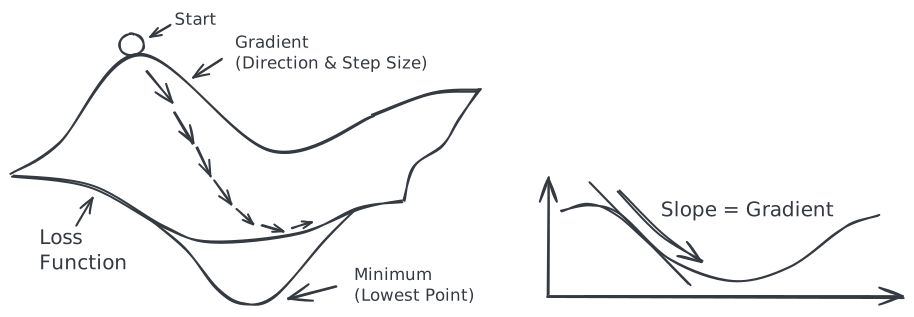 Figure 8: Gradient Descent Visualization. 尋找 Loss Function 最低點的過程,就像是下山的步伐,斜率 (Gradient) 決定了方向與步幅。
Optimization: 我們的目標是找到山谷的最低點 (Global Minimum),那裡代表模型的誤差最小。
3.4 Probability: Managing Uncertainty
現實世界的資料充滿了雜訊和不確定性。機率統計提供了量化這些不確定性的框架。
- Uncertainty (不確定性): 模型對於預測結果的信心程度 (Confidence)。例如:「這張照片有 80% 的機率是貓」。
- Loss Functions (損失函數): 許多 Loss Function (如 Cross-Entropy) 都是基於機率理論中的 Maximum Likelihood Estimation (MLE) 推導出來的,目標是找到一組參數,讓模型產生觀測資料的機率最大化。
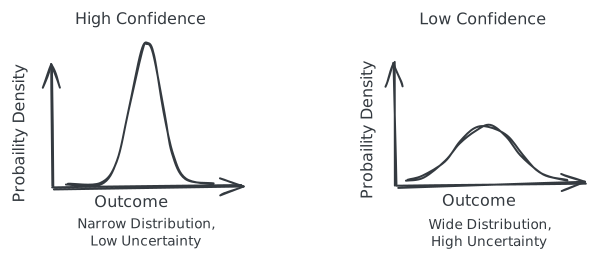 Figure 9: Quantifying Uncertainty. 機率分佈幫助我們理解模型預測的不確定性。
Reality: 真實世界充滿雜訊,模型給出的永遠是一個「機率」,而不是絕對的真理。
4. Conclusion
這篇文章從最宏觀的 AI 領域開始,一路聚焦到 Machine Learning 的三大學習方式,最後停在 Deep Learning 的數學基石。
- Hierarchy: 我們確認了 AI > ML > DL 的層級關係。
- Paradigms: 理解了 Supervised (有標籤)、Unsupervised (找結構) 與 RL (獎勵機制) 的差異。
- Foundations: 知道了 Linear Algebra (資料結構)、Calculus (優化引擎) 與 Probability (不確定性) 是如何支撐起整個 DL 框架的。
有了這些基礎知識後,下一篇我們將正式進入「訓練模型」的實戰環節,探討如何將資料餵給模型,以及如何評估模型的好壞。
Note: 本文內容整理自「深度學習介紹」課程講義,由 AI 輔助撰寫,並經人工審核確保正確性。